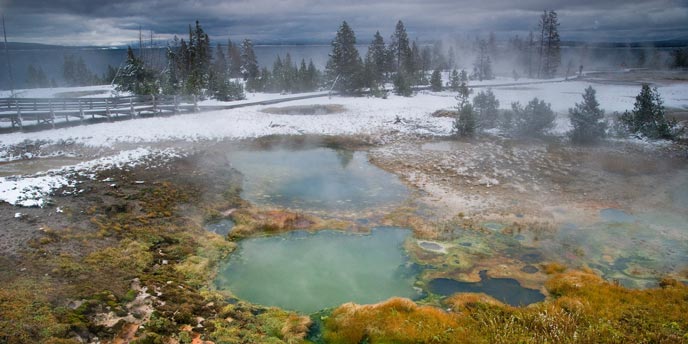
Discover West Thumb: Yellowstone's Unique Lakefront Geysers & Mud Pots
Nestled gracefully on the shores of the vast and pristine Yellowstone Lake, the West Thumb Geyser Basin offers a geothermal spectacle unlike any other in Yellowstone National Park. Here, the raw power of the earth bubbles and steams in vivid display, reflecting in the tranquil waters of America’s largest alpine lake. This unique juxtaposition of steaming pools, vibrant hot springs, and gurgling mud pots against a breathtaking lake panorama makes a visit to the
west thumb geyser basin in yellowstone national park an absolutely essential experience for any traveler. More than just a collection of geothermal wonders, West Thumb is steeped in history, offering a rare glimpse into the park's earliest recorded explorations and the evolution of its visitor experience.
A Lakefront Wonderland: The Unique Charm of West Thumb Geyser Basin
The West Thumb Geyser Basin stands out within Yellowstone’s volcanic landscape due to its unparalleled setting. It is, in fact, the largest geyser basin directly on the shores of Yellowstone Lake, encompassing not only the immediate lakefront but also the adjacent Potts Basin to the north. As you wander along the well-maintained boardwalks, you'll be treated to a sensory feast: the gentle hiss of steam rising from crystal-clear pools, the earthy scent of sulfur, and the mesmerizing dance of vibrant colors—from deep blues and emerald greens to fiery oranges and subtle yellows—all framed by the endless expanse of the lake.
The features here are distinctively "lake-integrated." You'll find geothermal activity extending into the lake itself, where boiling water vents directly beneath the lake's surface, sometimes creating miniature geyser eruptions visible offshore. This incredible phenomenon, a result of a 150,000-year-old volcanic crater, presents a mesmerizing display of the earth's raw power interacting with a vast body of water. While other basins boast larger or more frequent eruptions, West Thumb's charm lies in its intimate blend of water and fire, a truly harmonious and unique geothermal oasis that reflects the very spirit of Yellowstone's wonders. To truly appreciate this blend, one might consider exploring an even deeper dive into its historical significance, such as in
Experience West Thumb: Yellowstone Lake's Mesmerizing Geothermal Oasis.
Echoes of the Past: West Thumb's Pioneering Documentation
What truly sets the West Thumb Geyser Basin apart is its profound historical significance as the *first* Yellowstone feature ever formally documented in a publication. Long before official expeditions chronicled the park's marvels, a trapper named Daniel T. Potts, exploring the Yellowstone region in the 1820s, penned a remarkable letter to his brother back in Philadelphia. This letter, later edited and published in the Philadelphia Gazette on September 27, 1827, offered the earliest written account of the area, specifically describing what we now know as "Potts Basin."
Potts' vivid descriptions transport us back in time: he spoke of "hot and boiling springs some of water and others of most beautiful fine clay," comparing the latter to a "mush pot" that "throws its particles to the immense height of from twenty to thirty feet." He noted the clay's striking white and pink hues and the seemingly "fathomless" water, appearing "entirely hollow under neath." Potts also recounted a terrifying experience where one of his men narrowly escaped a "tremendous trembling" of the earth, followed by an "explosion...resembling that of thunder," an event he heard daily during his stay. These dramatic observations underscore the raw, untamed nature of the basin in its earliest days.
Decades later, in 1869, the Folsom-Cook-Peterson Expedition, the first scientific exploration of Yellowstone, visited West Thumb. David Folsom's account echoed Potts' observations, describing "several hundred springs...extending back from it about five hundred yards and into the lake perhaps as many feet." He marvelled at the water's "pale violet tinge" and clarity, allowing small objects to be seen "fifty or sixty feet below the surface." Folsom also noted "a small cluster of mud springs near by," filled with "mud, resembling thick paint of the finest quality," varying in color "from pure white to the various shades of yellow, pink, red and violet," capable of throwing mud "to the height of fifteen feet." These early accounts from both trappers and scientists provide an invaluable historical lens through which to appreciate the enduring wonders of this unique geothermal area. For more on this captivating history, delve into
West Thumb Geyser Basin: Yellowstone's First Documented Wonder.
Journey Through Time: Evolution of Visitor Experience at West Thumb
Historically, the West Thumb Geyser Basin served as a pivotal transit point for early visitors to Yellowstone. Imagine arriving via a dusty, bumpy stagecoach from the Old Faithful area, only to be presented with a choice: endure more rough road travel or embark on a leisurely journey across Yellowstone Lake aboard the steamship "Zillah." This elegant vessel offered a comparatively comfortable passage to the grand Lake Hotel, with its boat dock conveniently located near the south end of the basin, close to Lakeside Spring.
This area was once a bustling hub, far more developed than its current natural state. Historical records indicate the presence of a large campground, cabins, a photo shop, a cafeteria, and even a gas station, all situated immediately adjacent to the geyser basin. This level of development, while catering to early tourism, stands in stark contrast to today’s carefully preserved environment.
Today, the experience is vastly different and deliberately designed to protect the delicate geothermal features. Modern visitors traverse boardwalks, allowing for safe and immersive viewing without disturbing the fragile landscape. The focus has shifted from convenience and commercial amenities directly within the basin to a more respectful and interpretive interaction with nature. This evolution reflects the park's broader commitment to conservation, allowing visitors to witness the raw beauty of the
west thumb geyser basin in yellowstone national park largely as early explorers might have, albeit with improved accessibility and safety.
Exploring West Thumb Today: Must-See Features & Visitor Tips
When you visit West Thumb Geyser Basin today, you'll find a captivating array of geothermal features, each with its own story and distinctive character:
- Fishing Cone: Perhaps the most iconic feature, this cone sits right at the edge of the lake. Historically, brave (or foolish) visitors would catch fish from the lake and cook them directly in the boiling water of the cone – a practice now strictly prohibited and highly dangerous!
- Abyss Pool: Known for its exceptional depth and stunning, deep blue color, this hot spring offers a glimpse into the mysterious depths of the earth.
- Lakeside Spring: Located near the historical steamboat dock, this beautiful spring boasts clear, intensely blue waters.
- Thumb Paint Pots: A fascinating collection of mud pots where thick, colored clay bubbles and gurgles, creating a hypnotic, ever-changing display. The mud's hues, ranging from white to pink and various earthy tones, are a testament to the diverse minerals present beneath the surface.
- Big Cone & Little Cone: Other prominent geyser cones extending into the lake, demonstrating the unique lake-integrated geothermal activity.
Practical Tips for Your Visit:
- Stay on the Boardwalks: For your safety and the preservation of this fragile ecosystem, always remain on designated boardwalks and trails. The ground in geothermal areas can be extremely thin and fragile, concealing superheated water just beneath the surface.
- Best Time to Visit: Early mornings or late afternoons often offer fewer crowds, softer light for photography, and more visible steam, especially on cooler days.
- Photography: The reflections on the lake and the vibrant colors of the features make for incredible photo opportunities. Experiment with different angles and lighting.
- Safety First: Geothermal features are beautiful but dangerous. Do not touch the water or any features, and always supervise children closely.
- Dress in Layers: Weather in Yellowstone can change rapidly, so dressing in layers is always a good strategy.
- Wildlife: While the geothermal features are the main draw, keep an eye out for lake birds, bison, or elk that might be grazing nearby, always maintaining a safe distance.
- Accessibility: The boardwalk trail through West Thumb Geyser Basin is generally flat and accessible, making it a good option for visitors with varying mobility levels.
In conclusion, the
west thumb geyser basin in yellowstone national park is much more than just another stop on the Grand Loop Road; it is a captivating fusion of geological wonder, historical legacy, and unparalleled scenic beauty. From the earliest published accounts to its role as a vital travel hub and now as a carefully preserved natural sanctuary, West Thumb continues to mesmerize. Its unique position on Yellowstone Lake, with geothermal features extending directly into the water, offers a distinct and unforgettable experience that captures the essence of Yellowstone's wild heart. A visit here promises not only stunning visual delights but also a profound connection to the park's rich past and its powerful, living geology.